How to Rank Higher on Google Maps (The Real Playbook, With Receipts)
How we took Clog Hunter from unknown to #1 on the Tahlequah grid and $170K months. The exact system we run to rank higher on Google Maps, play by play, with the receipts.
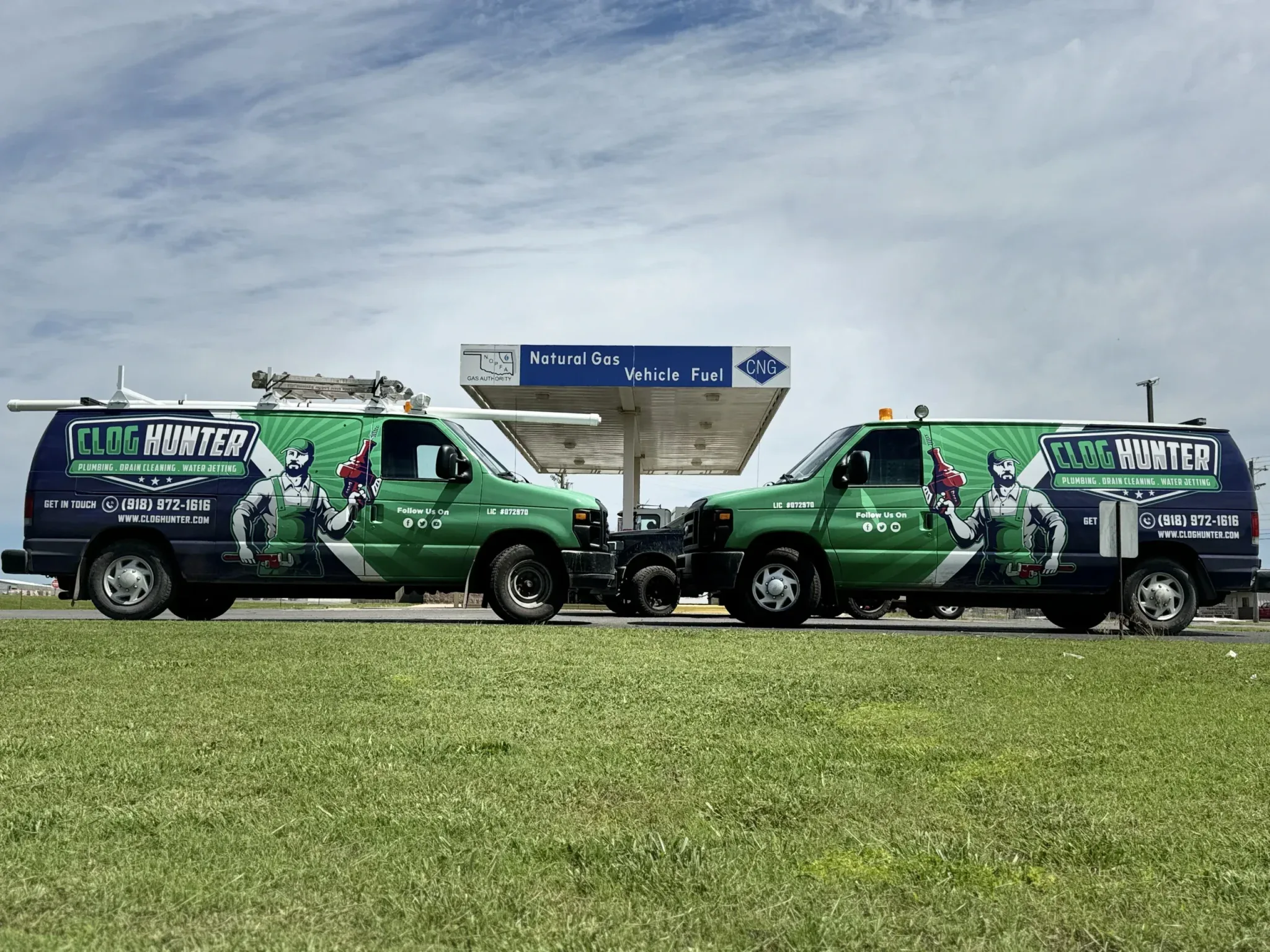
Search “plumber” in Tahlequah today.
There’s a good chance you’ll see Clog Hunter before anyone else.
Four years ago, the company didn’t exist. Today it routinely dominates the grid, generates more than $170,000 months, and still follows the same operating system we built on day one. The full scoreboard is public.
This is that operating system.
We didn’t stumble into it. We built for Google Maps from day one, and everything you’re about to read happened in roughly the order we discovered it. Some lessons came quickly. Others took months of testing. Every screenshot in this guide earned its place.
Measure Reality Before You Optimize
Clog Hunter was never a wing-it operation. Sean brought us in from day one with a simple mandate: this company could not fail. So the first professional move wasn’t ads, wasn’t profile tweaks. It was a baseline. We ran a Local Falcon grid scan to see the market the way Google sees it, not the way it looks from your own phone.
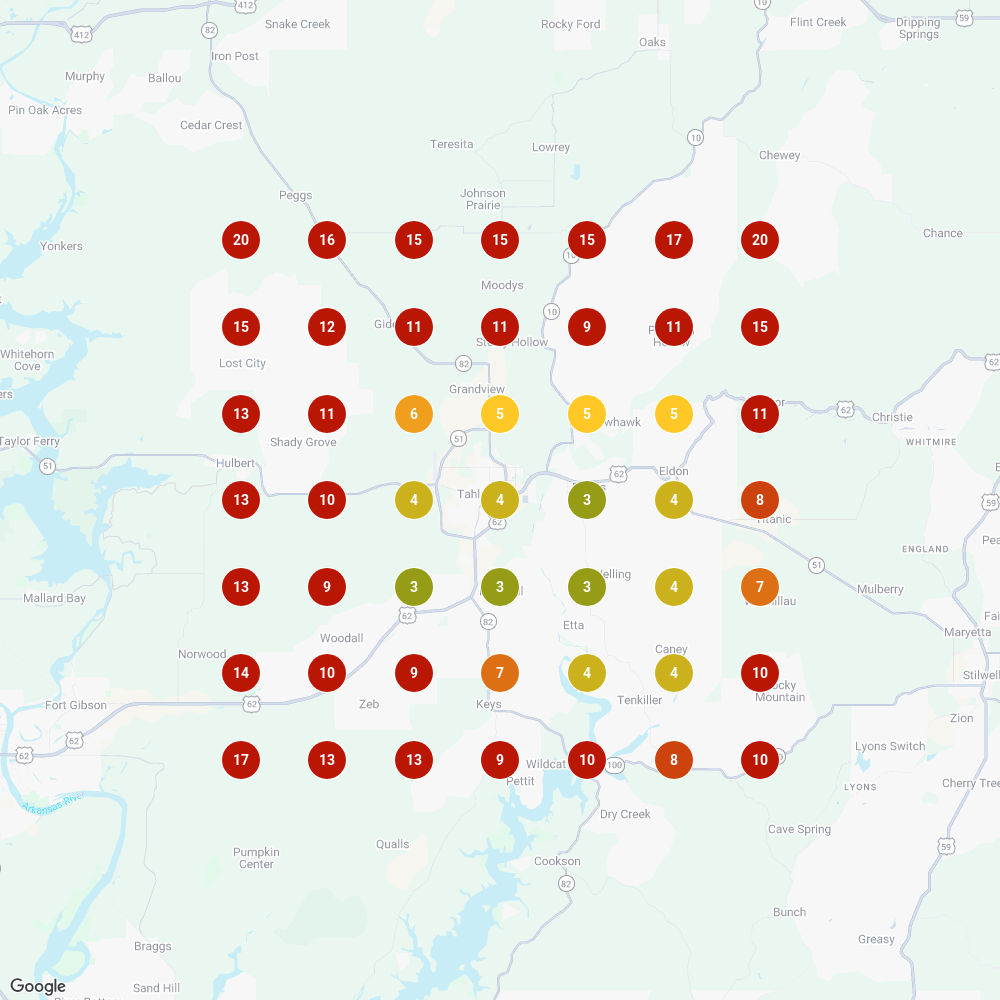
The map didn’t lie. Early presence, but uneven: promising in spots, invisible in others. That scan became our compass. No guessing. Just steering.
Under the hood, Google’s local algorithm weighs three things:
- Relevance is Google’s confidence that you’re the right business for the search. We influenced it with the primary category (“Plumber,” not something broad like “Contractor,” which dilutes you for actual plumbing searches), tight secondaries, accurate services, real website content, job proof pages, and reviews that mentioned specific work. And we put the word plumbing everywhere it honestly belonged: pages, services, proof posts. If you don’t do this, you’re leaving leads on the table. No excuses.
- Distance is how close you appear to the searcher. We didn’t draw a big service area and hope. We got an office right in town. In our experience this is the strongest ranking factor, and it seems to be getting stronger; it’s how Google keeps the map somewhat balanced. You can’t fake it, so plant your flag where the customers are.
- Prominence is how trustworthy and known you look. Reviews, citations, branded searches, and published proof all feed it. Get citations set up immediately, day one, not week six. We call it citation momentum: early, consistent listings tell Google a real business just arrived.
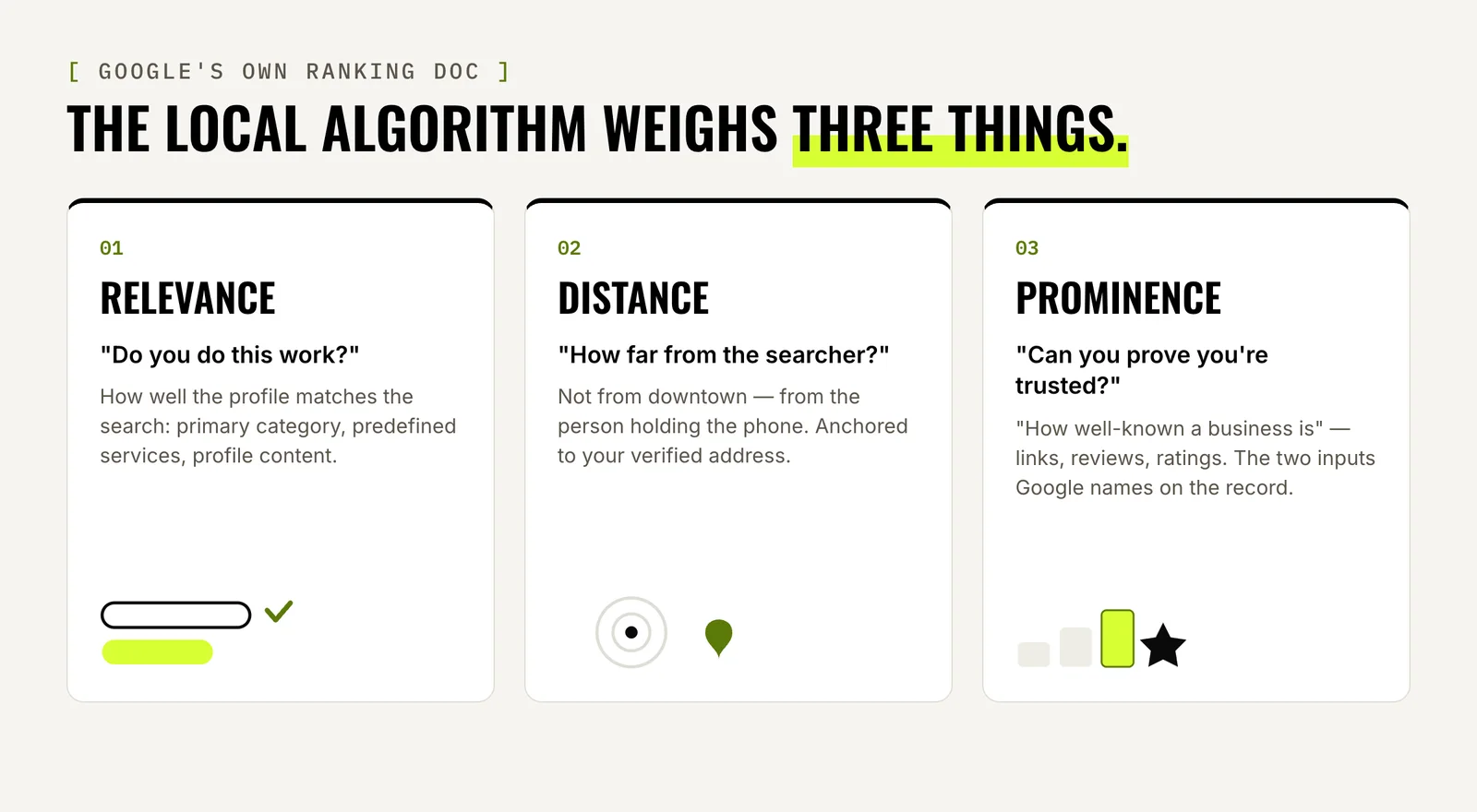
Every play that follows is just a way of feeding those three signals with things that are true.
The best marketing is work you can prove.
Remove Luck From the Review System
Half the techs asked for reviews. Half forgot. That inconsistency was enough to choke review growth.
So we built a two-layer system.
Layer one is automation. Every completed job automatically triggers a Housecall Pro text with a one-tap Google review link. That guarantees every customer gets asked, even if the technician forgets, and the link lands while the fixed toilet is still fresh in the customer’s mind.
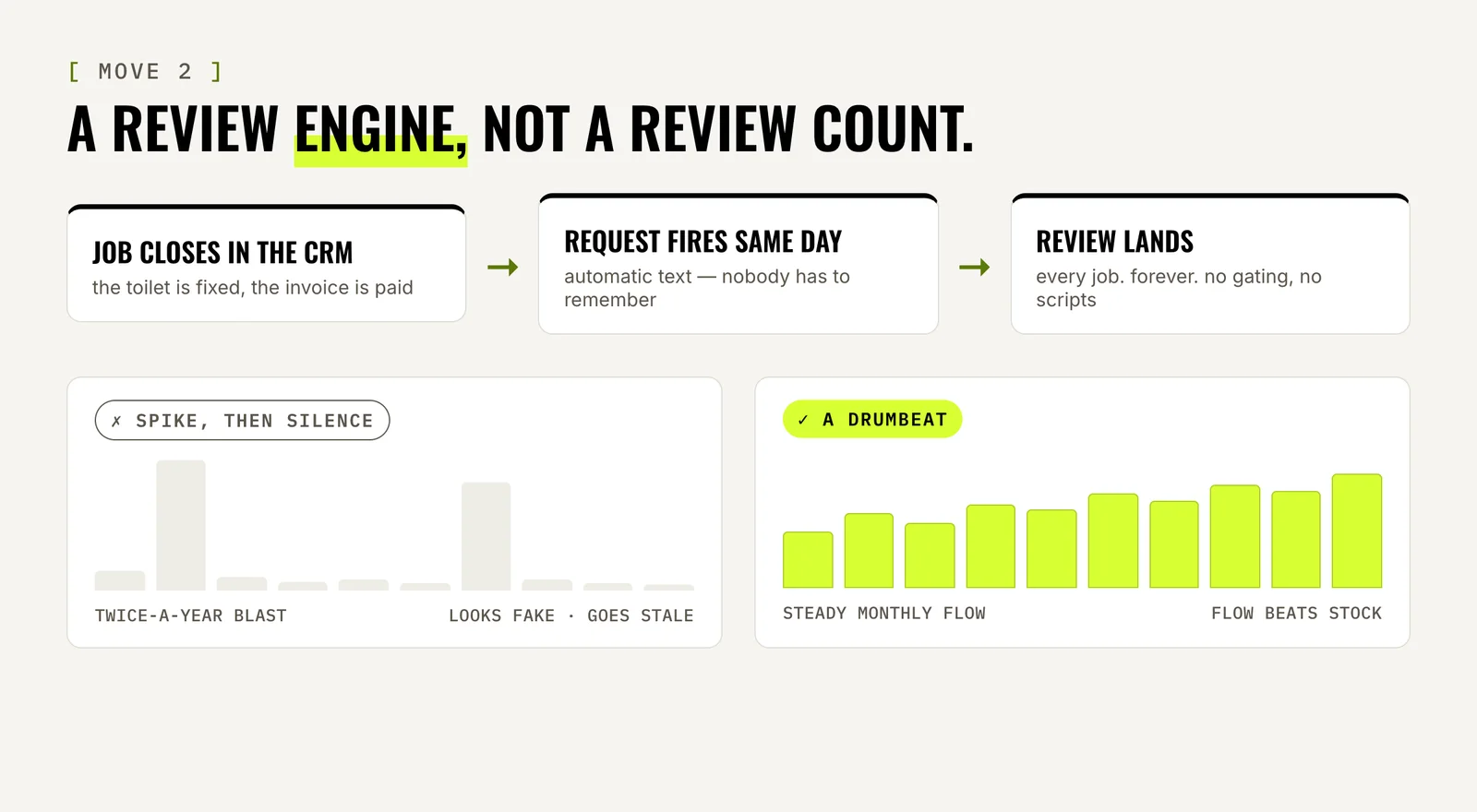
But automation alone wasn’t enough. Only a small percentage of customers actually leave a review from a text message.
The real lift came from the technicians. Before leaving, every plumber simply asks:
“If we earned it today, we’d really appreciate a fair, honest Google review. You’ll also get a text with the link, so it’s easy whenever you have a minute.”
That ten-second conversation consistently outperformed automation by itself. The text makes it convenient. The technician makes it personal.
To make the ask stick, we aligned incentives: when a customer voluntarily mentioned a technician by name in their review, it counted toward an internal performance bonus. The goal wasn’t to buy reviews. It was to reward consistently delivering service worth talking about.
The numbers made the case. Before the in-person ask, we averaged about 5 Google reviews per month. Once it was part of every completed job, we jumped to 25+, with the automated text still delivering the link.
The whole engine, end to end:
- Job completed
- Housecall Pro automatically sends the review text
- The technician asks for a fair, honest review in person
- The customer receives the link while the job is still fresh
- Reviews compound week after week
Nothing dramatic happens during the first month. That’s normal. Around week six, the curve starts to bend. Momentum matters more than any single review.
Reviews don’t happen because software sends texts. They happen because people remember the technician they just trusted in their home.
Reviews aren’t reputation. They’re fuel.
Stop Trusting Your Own Phone
Every contractor feels good about the rankings they see from the truck. Your phone knows where you’re parked (usually at your own shop) and it knows you search for yourself constantly. It’s the least honest rank-checker in your market, which is why every contractor thinks they’re #1 from their own parking lot.
So we never trusted it. We ran proper grids from day one:
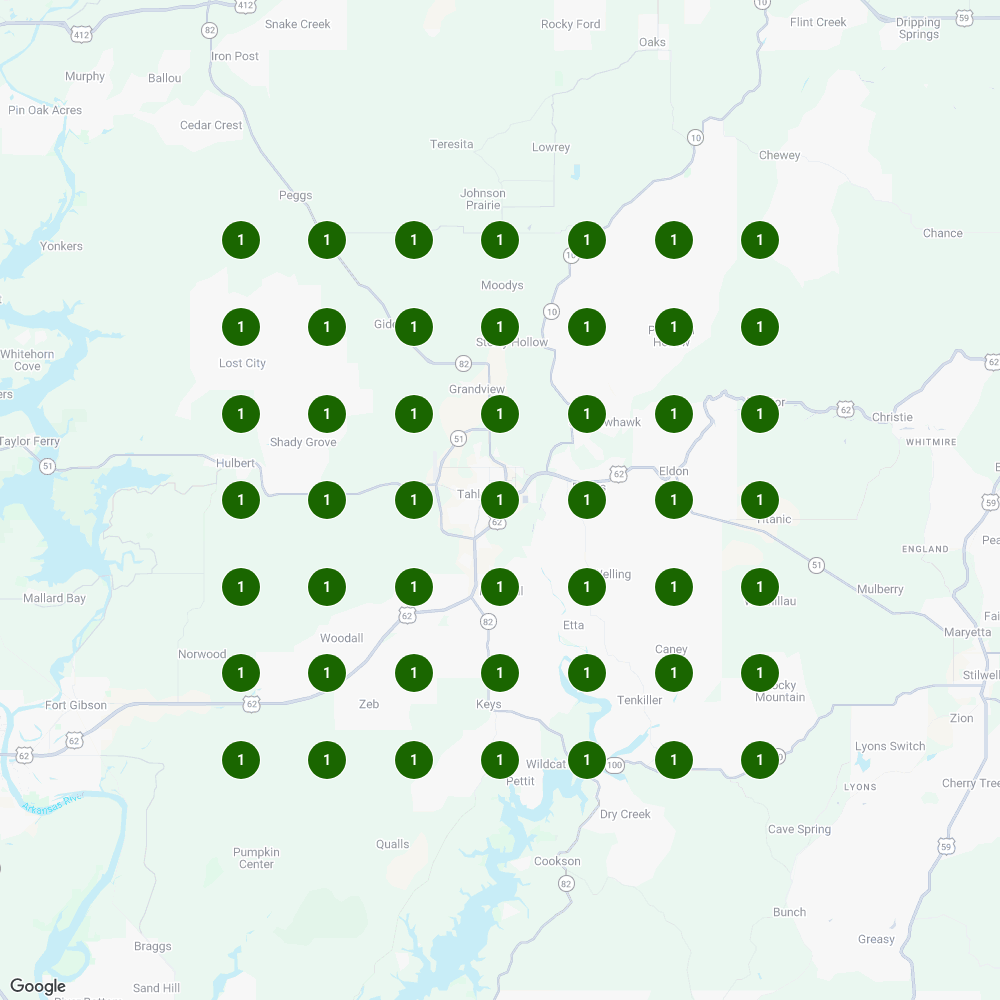
Local Falcon creates a grid of search points across your service area. We used 7×7 or 9×9 depending on radius. It runs your keywords from each point and shows a heatmap with no personalization: your true rank at every point on the map.
The first grid is usually a gut check. Contractors almost always think they’re stronger than they really are. We ran the same scans every month with identical settings so we could compare apples to apples. Rankings fluctuate point to point; the month-over-month grid gives you the real trend.
After a few hundred scans, you stop reading numbers and start reading shapes:
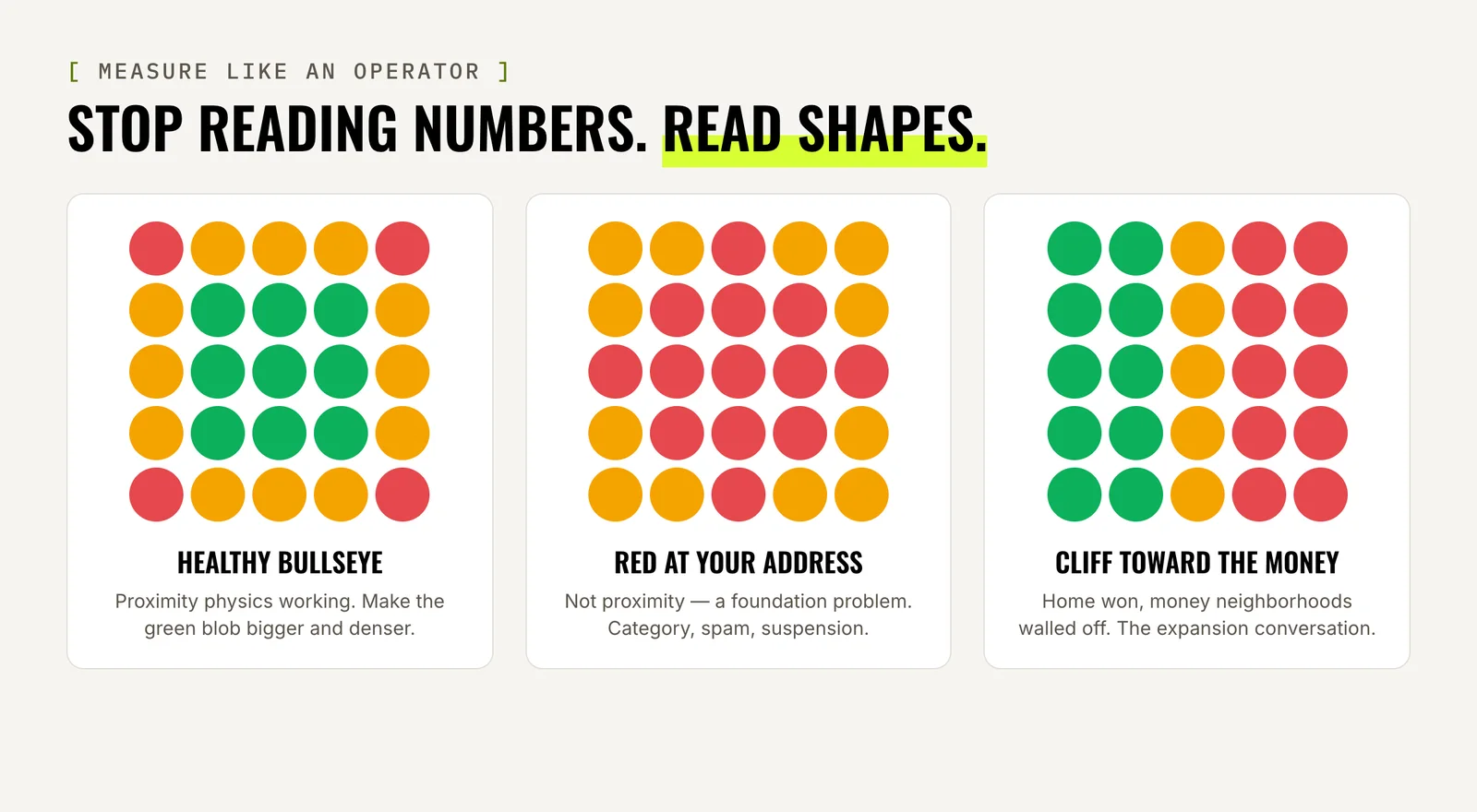
The map doesn’t care how hard you worked. It cares what you proved.
Turn Every Job Into Evidence
One question changed how we documented work: can Google see this job happened?
Google can’t rank a job it doesn’t know exists. The truck did the real work. The website just made sure Google knew about it. So every completed job ran through the same SOP before it counted as done:
FIELD SOP 03: JOB PROOF PAGE

Every completed job answers one question:
Can Google see this happened?

□ 8–12 real photos (before / during / after, truck, tools)
□ Neighborhood reference
□ Service performed
□ Problem the customer had
□ The exact fix and parts used
□ Date
□ Internal links to related services
□ Schema markup

STATUS: Required before publishing
Each proof page lived on our own domain, linked into the service and city pages it reinforced:
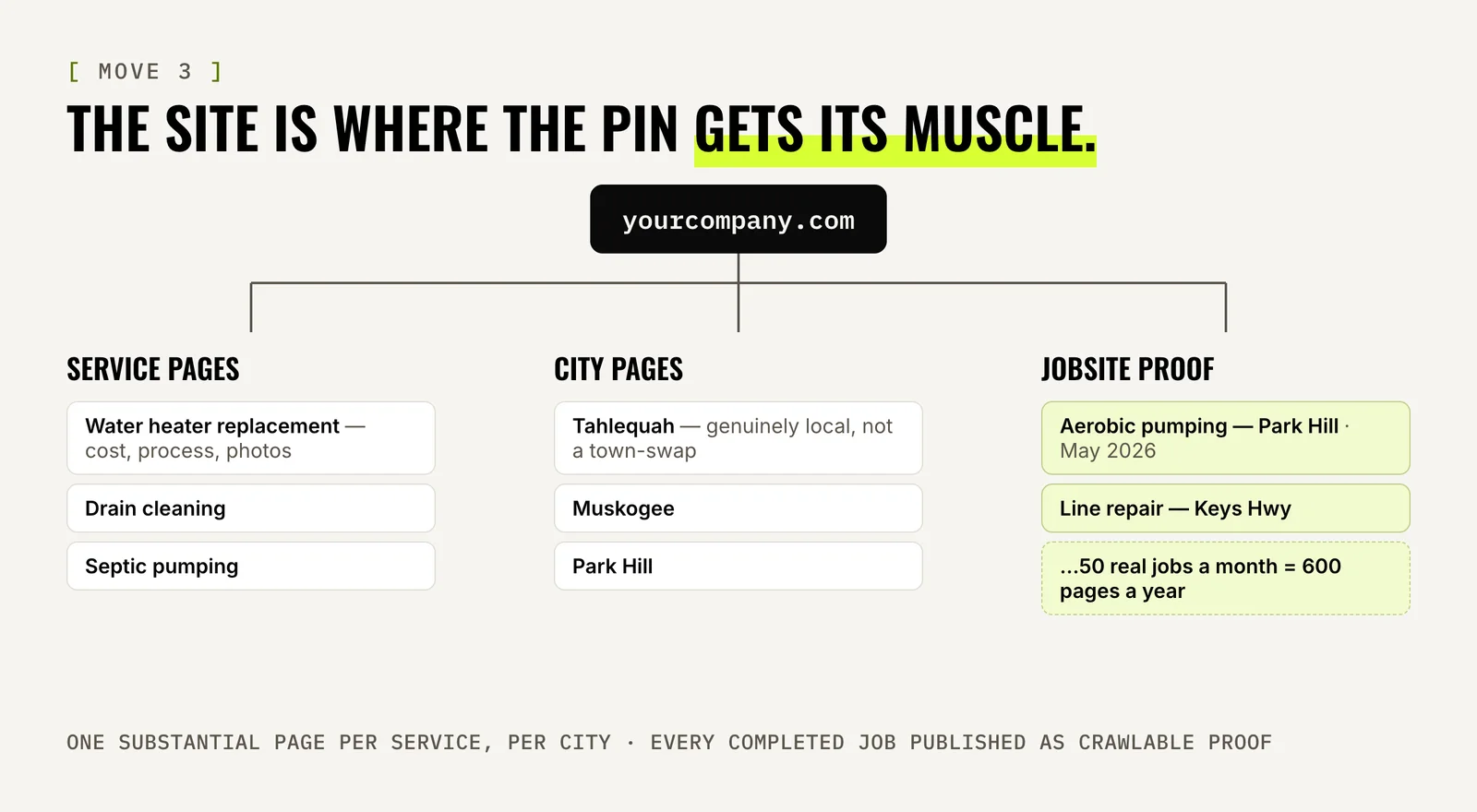
Most contractors publish advertisements. We published evidence.
Every completed job made the next job easier to win. One review led to another. One job page reinforced the Business Profile. One photo became another proof point. None of it felt dramatic in the moment. That’s the point. The system compounds quietly until it becomes difficult to compete with.
Once we started publishing one or two of these per week, the grid tightened month over month, until we held the top three from every single point on the Tahlequah scan. This system worked so well we eventually productized it as Jobsite Pins: the CRM reports a completed job, and it becomes a published proof post automatically.
Remove Spam Before It Removes You
The pack has three slots. Every fake listing above you is renting one you could own, and ignoring spam felt like handing out free rankings.
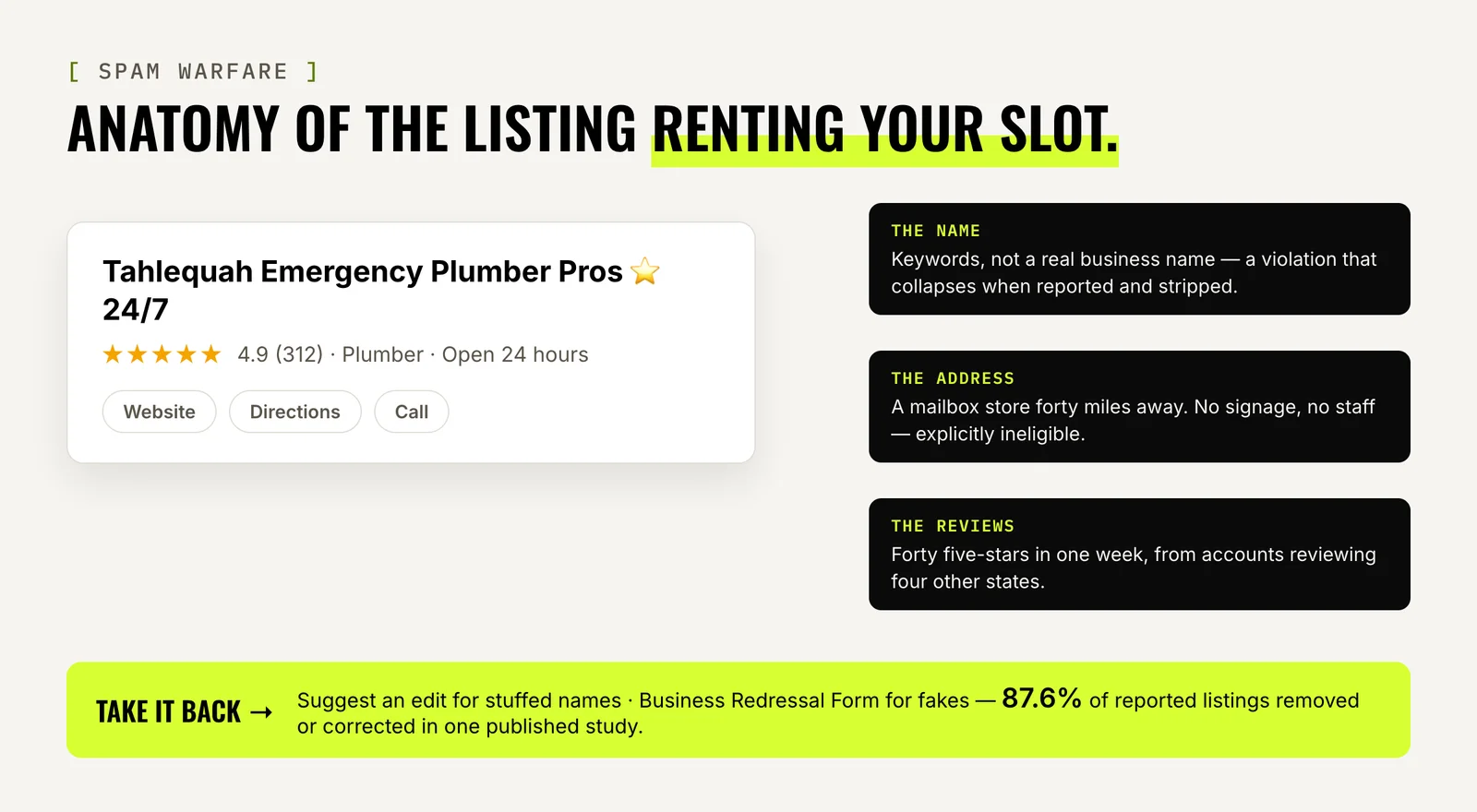
Once a month we sat down with coffee, reviewed the pack, took screenshots of violations (keyword-stuffed names, suspicious addresses) and submitted the evidence through Google’s redressal process.
When a stubborn spam listing disappeared, our grid improved naturally in that area. Google can’t recommend work it can’t verify. A lot of businesses can hit #1 once. Holding it is the hard part.
The flip side: don’t be the spam. Keyword-stuffing your own name might work, right up until smart competition reports you. Then you’re told to change it, or suspended for 30+ days while you scramble to prove to Google you’re legit, digging up LLC documents and a proper lease. Keep the name clean from day one. But don’t exclude your service from it either: if Plumbing, Roofing, or HVAC is your main category, it belongs in the name: legally, on the LLC, on the trucks. That’s the difference between Clog Hunter Plumbing and “Best Emergency Plumber Tahlequah 24/7.”
Let the System Compound
There wasn’t one big Tuesday.
Reviews kept coming. Grids turned greener. The website filled with real proof. The pack stayed cleaner. One random morning we noticed the phone hadn’t slowed down in months. Trucks stayed busy. Customers mentioned seeing us at the top.
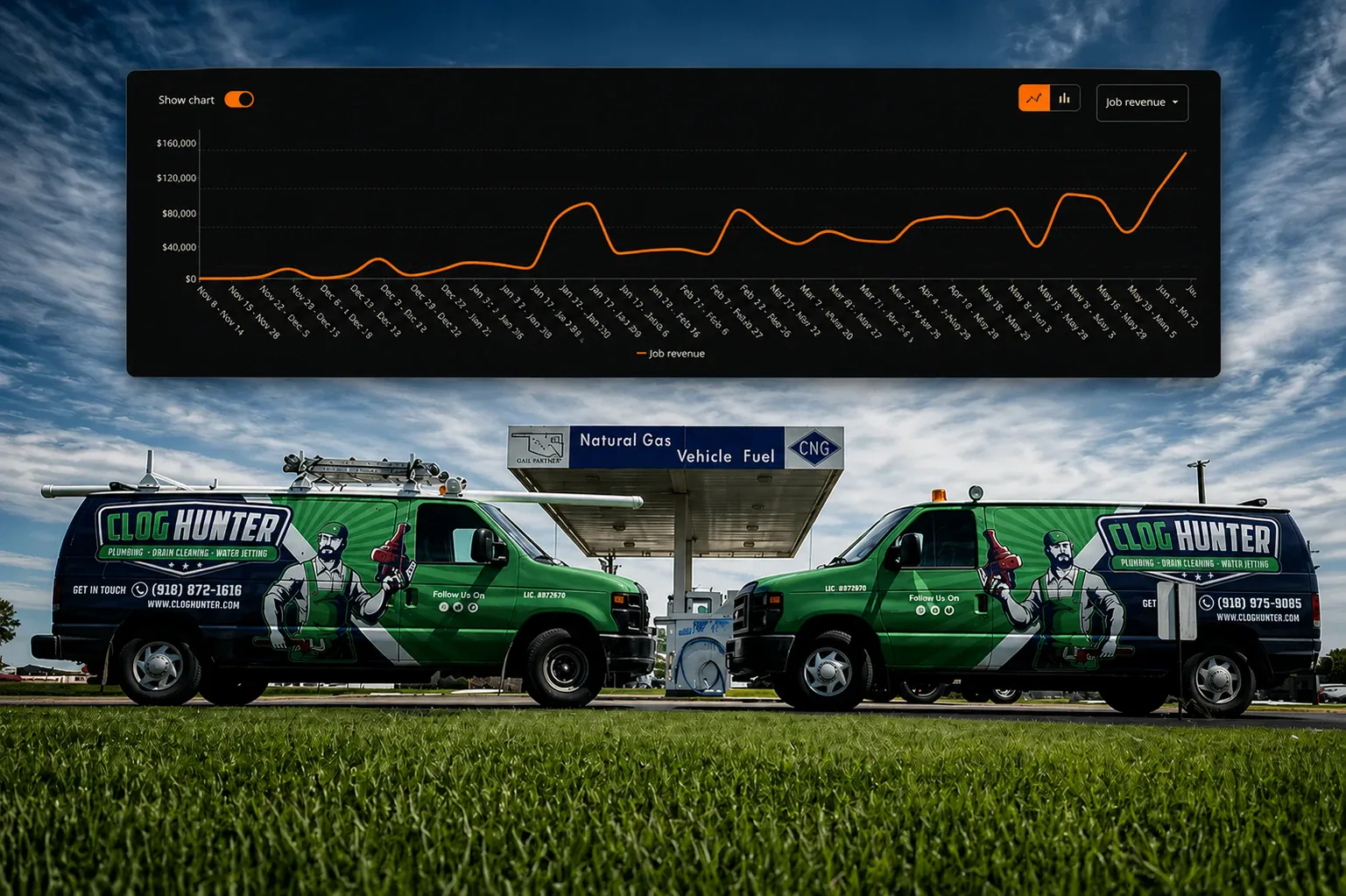
Revenue didn’t spike overnight, but the floor moved up. The slow weeks almost disappeared. We learned to stop celebrating rankings and start celebrating consistency.
Evidence compounds. Hacks expire.
Build an Asset That Compounds
We built a plumbing company Google wanted to show at the top. Clear signals. Real proof. Steady activity. Clean competition.
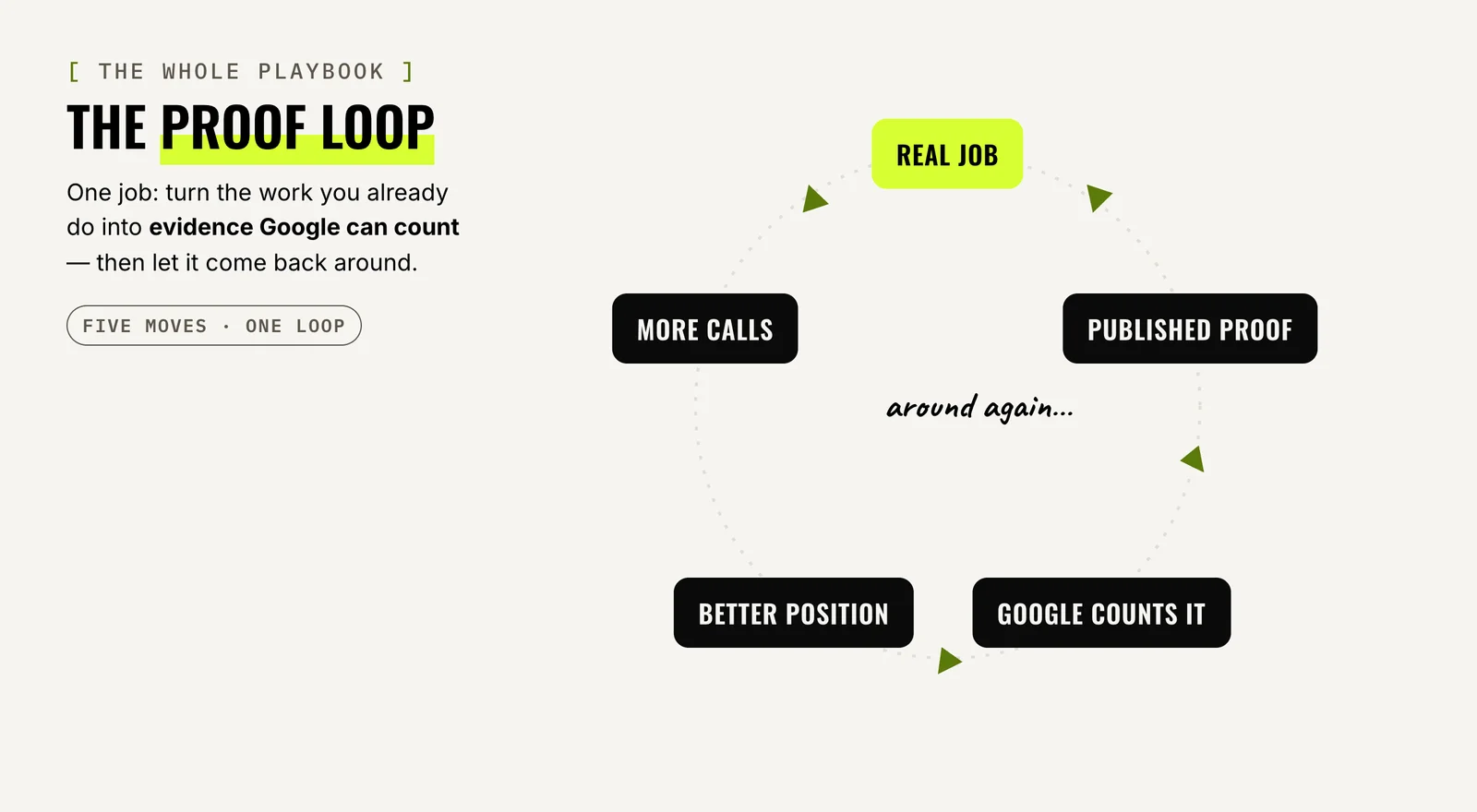
That deliberate focus took us from early presence to consistent top spots across the grid. Leads that didn’t vanish when a budget paused. Growth that felt solid. A crew that stayed busy with good work.
Things We Tested That Didn’t Matter
We tried a lot of things that sounded good but delivered little:
- EXIF geotagging on photos → no measurable change (Google strips the metadata on upload anyway)
- Google Posts every week → helpful for customers, minimal ranking lift
- Keyword stuffing in descriptions → short-term noise, long-term risk
- Adding 300+ service areas → diluted focus, no real expansion
- Fake citations → waste of time
- Buying reviews → never worth the risk
Focus on what actually moves the needle.
The Timeline of the Climb
- LaunchMonth 0: GBP foundation + correct categories
- First GridMonth 1: measure reality, find the weak spots
- Review AutomationMonths 2–3: velocity begins
- Job ProofWeekly publishing, every job documented
- Spam CleanupMonths 4–6: monthly audits begin
- #1 GridMonth 8+: consistent top positions
- $170K MonthsMonth 22: still compounding
The Google Maps Operating System
Strip everything above down to one page and this is the loop we still run every month:
The Google Maps Operating System
- Measure
- Fix Foundation
- Automate Reviews
- Create Job Proof
- Run Grid
- Find Weak Areas
- Publish Evidence
- Repeat Monthly
That’s it. That’s the system. Print it, steal it, run it.
If You’re Running a Service Business
Plumber, HVAC, roofer, electrician: the rules are the same. Stop renting attention. Build evidence Google can trust. Own the place people look when something breaks.
The playbook transfers, too. We ran the same system on a septic company launched from zero in January 2026. Five months later it was #1 across the grid in both launch markets.
Everything here is runnable yourself, and if you’d rather have it run for you, that’s what our Google Business Profile management is: these exact plays, on autopilot.
If you want a straight answer on your own market: I’ll run your grid, look at your current local results, and tell you what’s holding you back plus the highest-leverage next step. Fifteen minutes. No pitch. Just the truth from someone who’s been in the truck.
We Didn’t Build Rankings
We lived this in the truck, on job sites, in monthly scans and late-night tweaks. The greens spread. The calls steadied. The business grew.
We never tried to convince Google we were the best plumber in town.
We just kept giving it more evidence that we were.
Eventually, Google agreed.
Last updated July 2026. This playbook gets maintained. When the system changes, the plays change.
Ready to own the territory?
Send the market, the trucks, and the goal. We’ll map the stack and show you where the leverage is.